
Drain the cartridge, seal it in a bag, and put it in your general household waste. Do not place used cartridges in the recycling bin, and never flush or burn them.
What is inside a reverse osmosis cartridge?
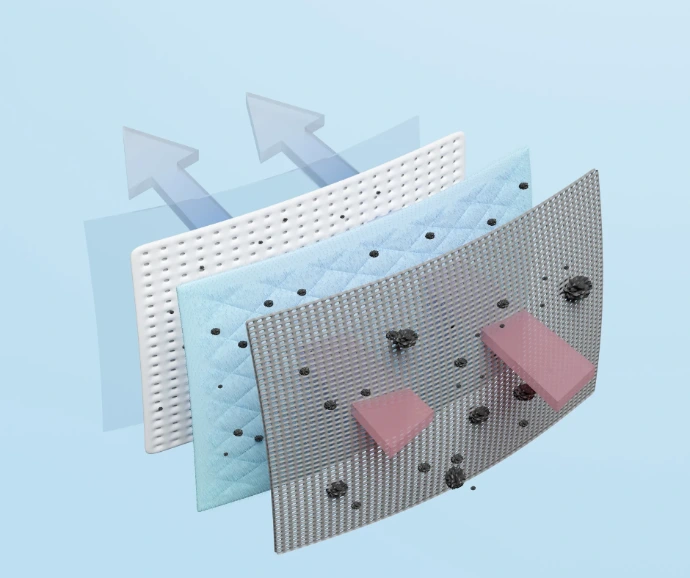
A typical reverse osmosis (RO) system uses several stages, and each one is made from different materials:
- Sediment filter: usually a pleated or wound polymer fibre, most often polypropylene. It catches particles.
- Carbon filter: activated carbon granules or a solid carbon block, held together with a polymer binder. It absorbs chlorine and some organic compounds.
- RO membrane: a thin film composite. Its active layer is a polyamide film only a few hundred nanometres thick, supported by a porous polysulfone layer and a polyester fabric backing.
- Housing and end caps: typically plastic, such as polypropylene or ABS.
- Seals and adhesives: rubber O-rings, often EPDM or silicone, plus polyurethane or epoxy resins that bond the parts together.
In many cartridges, these components are glued, potted or pressed into one sealed unit. They are not designed to be taken apart at home.
Why are reverse osmosis cartridges hard to recycle?
Recycling systems work best with a single material. A clean bottle made from one plastic can be sorted, washed and reprocessed. An RO cartridge combines several polymers, a fabric, activated carbon, rubber seals and resins, all bonded together. Separating them would need specialised industrial processes, which are not practical for a small product used in homes.
The membrane adds a further challenge. Its polyamide layer is cross linked, which gives it strength and stability. It does not melt and reform the way ordinary plastics do. Recovering it cleanly from the rest of the cartridge is still an active area of research, not an established process.
There is also the material the cartridge has collected. Sediment and carbon filters hold onto what they were designed to remove from the water. That is their purpose, but it means a used cartridge should be handled as household waste, not as a clean material waiting to be reprocessed.
How do I dispose of a used reverse osmosis cartridge?
Used RO cartridges in Ireland go in general household waste, because their mixed materials and collected contents mean they cannot be recycled in the usual way. These steps will help:
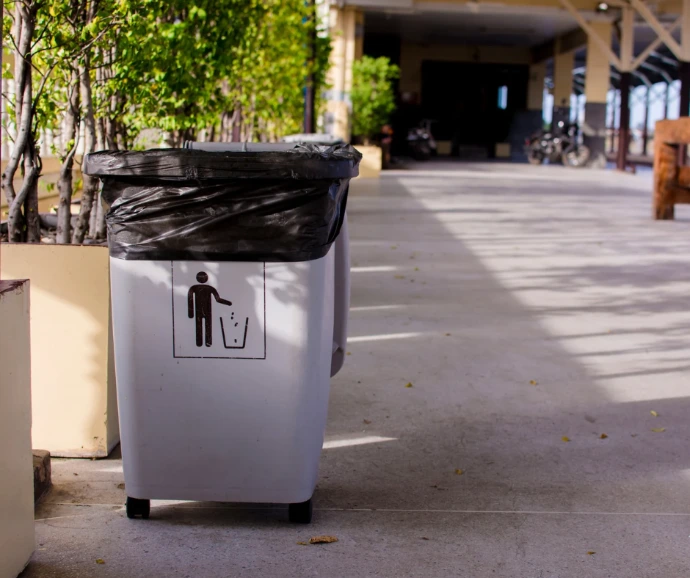
- Drain the cartridge. Hold it over a sink for a moment to remove excess water. Do not cut it open or try to empty the filter media.
- Seal it in a bag. A plastic bag keeps the cartridge contained and protects waste collectors from any residue on the outside.
- Place it in your general waste bin. Keep it out of the recycling bin, even if the cartridge housing looks like plastic.
- Never flush or burn it. Flushing can block pipes and harm the wider water system, and burning releases fumes from the materials inside.
Should I follow the replacement schedule?
Yes. Replacing filters on time keeps the system working as designed and avoids unnecessary waste. Changing parts too early uses up cartridges that still have useful life left. Changing them too late can reduce how well the system performs. Your installer or the manufacturer’s guidance will set out the right schedule for your system and your water supply.
Looking for a system that suits your home?
Renewell Water is one of the leading water filtration companies in Ireland, and our customers consistently share positive feedback about their systems. You can read their experiences at renewellwater.com/reviews. If you are considering an RO system, the ArkKz Water Filtration System (Reverse Osmosis) is a good place to start. Choosing a system that matches your water and comes with a clear maintenance plan makes filter replacement easier to plan.
Renewell Water offers a free consultation for you. Book it by clicking here.